

Here, There & In My Chair with Messier 2
There are, by my count, 42 star clusters in Charles Messier’s famous list of 110 deep space objects that are “not comets.”
And I’ll confess: unless you’ve got a Hubble or James Webb telescope lying around your backyard, or a wicked (and no doubt wickedly expensive) astrophotography setup: they all kinda look like fuzzy snowballs of light.
Now, my Seestar S50 does a nifty job of focusing and framing these deep space treasures, in an economical package, comparatively speaking. But, as I shared in the first installment of this new blog series, sometimes it deepens my appreciation of our universe’s wonders to tap into other technology and glimpse them “here, there and in my chair.”
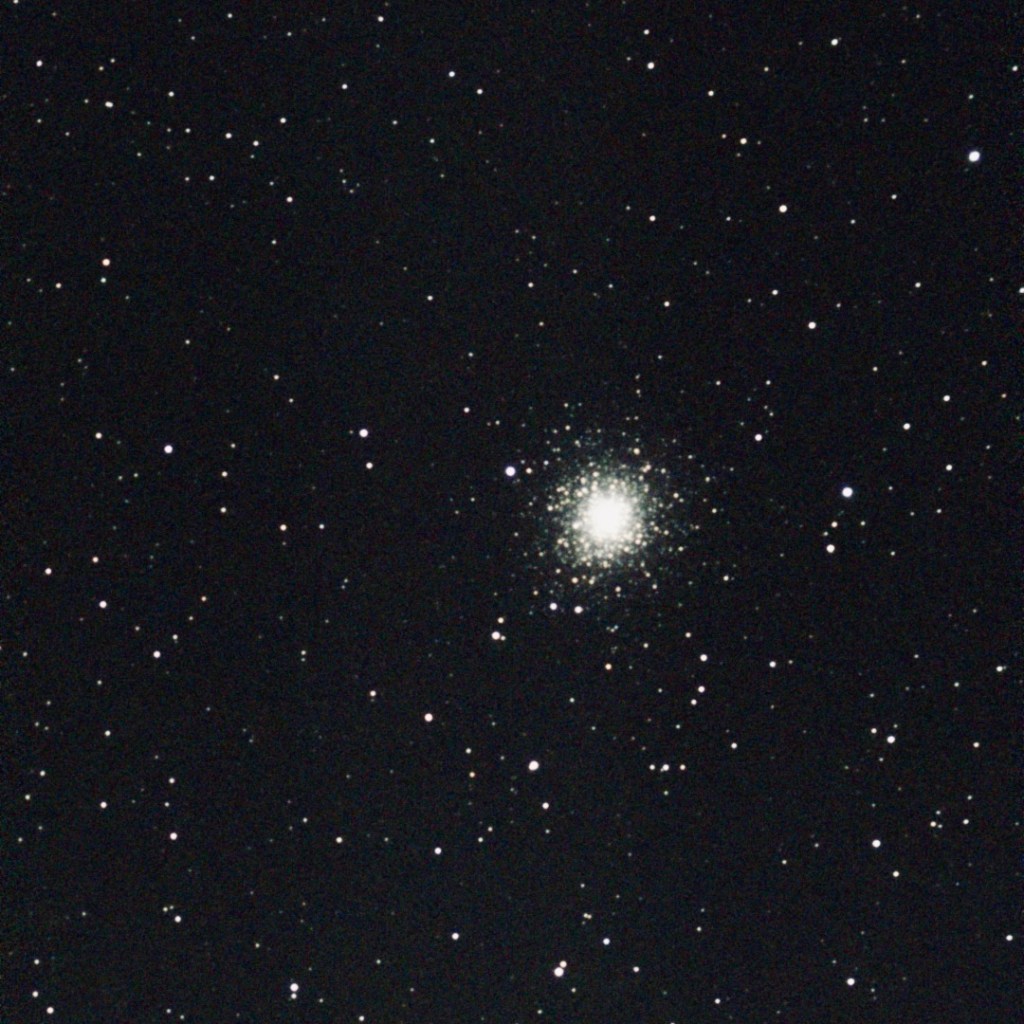
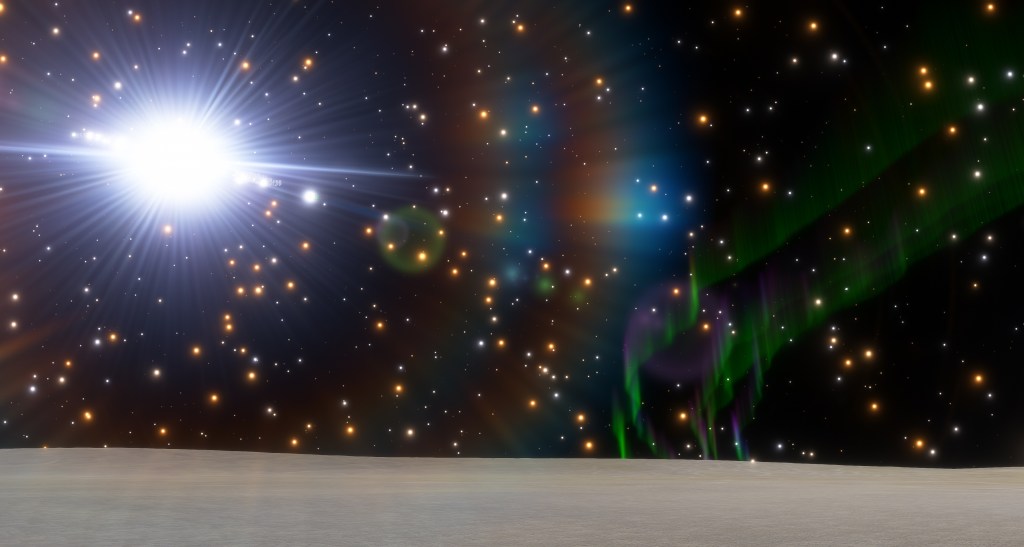
Today, we take a look at the M2 globular cluster in the constellation Aquarius from “here” – as photographed by the Seestar camera scope from my backyard in North America; from “there,” by flying through space 37,000 light years to see the cluster up close in the simulation software, Space Engine; and again “in my chair,” as I tap more deeply into Space Engine to get a unique view of M2 only an astronaut, or an extra terrestrial, could otherwise see!
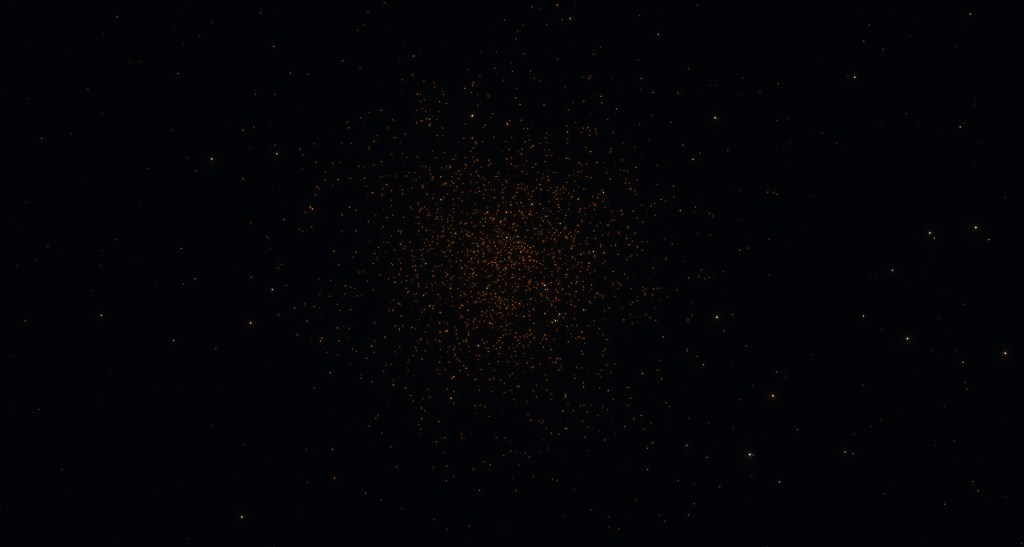
M2 Globular Cluster
Here: M2 is usually best seen from my part of the world in October, when Aquarius comes up a little after sunset and sweeps from East to South (or rather, as the Earth turns South to East and the sky rotates the other direction).
This year, Saturn is hanging out in Aquarius, too, which garners a bit more telescope time than M2, which doesn’t even have a unique name. Sorry, M2.
French astronomer Jean-Dominique Maraldi discovered M2 in 1746 while he was comet-hunting, and Messier added it as object 2 to his list after M1, the Crab Nebula, which Messier originally mistook for a comet. So, there you go.
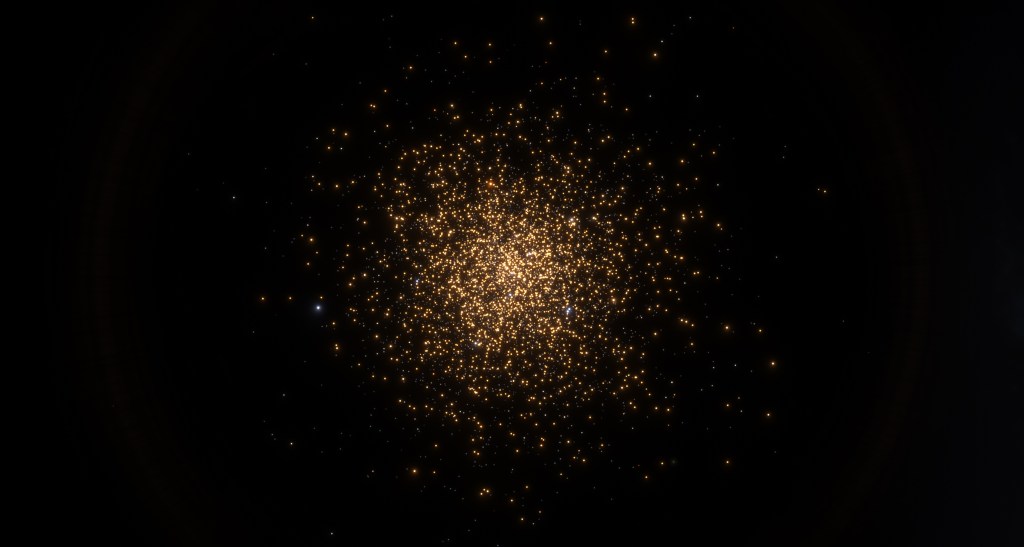
There: M2 is about 37,000 light-years from Earth and contains more than 150,000 stars. Its about 12.5 billion years old, which makes it one of the oldest globular clusters in the Milky Way.
M2 is located in the southern galactic cap, below the Milky Way’s southern pole. It is more elliptical in shape than most globular clusters and has a diameter of more than 150 light years.
And in My Chair: M2 is part of the Gaia Sausage, which is thought to be the remains of a merged dwarf galaxy.
In this final image from Space Engine, I set up on a planet within the globular cluster and looked back toward our region of the galaxy (accidentally leaving labels on objects there, which are just visible behind this planet’s home star). In addition to other stars in the cluster dotting the nighttime sky, you can enjoy aurorae activity at this planet’s pole.
 Dadsense